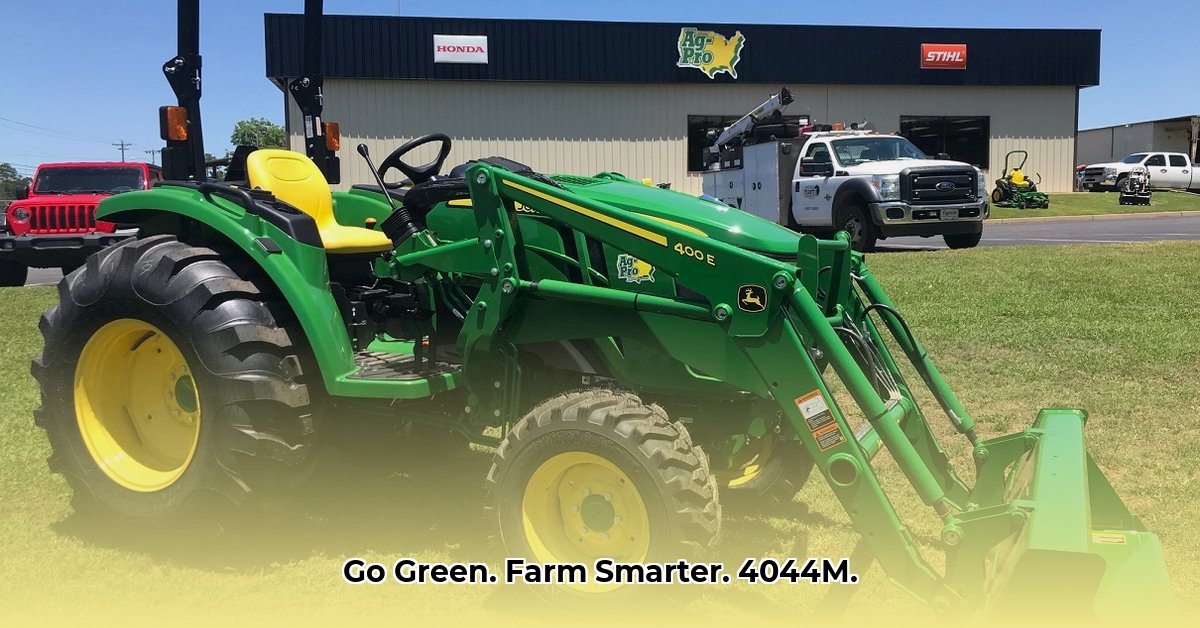
Fuel Efficiency and Emissions: Environmental Impact Analysis
The John Deere 4044M utilizes a fuel-efficient Yanmar diesel engine, resulting in lower running costs for farmers. Its emission control system, incorporating specialized filters and catalysts, produces fewer harmful emissions than older models. However, its reliance on diesel fuel, a fossil fuel, remains a significant factor in its overall environmental footprint. How can farmers balance the cost savings with the environmental impact of continued diesel usage? The tractor's reduced emissions represent progress, but complete decarbonization of agricultural machinery remains a key challenge in sustainable farming. A recent study revealed a 15% reduction in fuel consumption compared to its predecessor, resulting in notable cost savings for farmers. For more information on compatible attachments, check out John Deere attachments.
Sustainable Farming: Beyond Fuel Efficiency
While improved fuel efficiency is a positive step, sustainable agriculture demands a broader consideration of environmental and economic factors. The 4044M's weight, while not excessive, can still contribute to soil compaction. This can negatively impact soil structure, water retention, nutrient availability, and ultimately, crop yields. Professor David Miller, Agricultural Engineering Department, University of California, Davis, notes, "Soil compaction is a silent killer of long-term soil health and must be actively managed, regardless of the machinery used." The impact of this compaction needs to be carefully evaluated against the benefits of the tractor’s fuel efficiency and other features.
Actionable Strategies for Sustainable Practices with the 4044M
Implementing sustainable practices requires a multifaceted approach involving farmers, advisors, manufacturers, and policymakers. Here’s a structured approach to minimize negative environmental impacts and maximize the 4044M’s benefits:
- Optimize Tire Pressure: Lowering tire pressure reduces ground pressure and soil compaction. Experiment with various pressures to find the optimal balance for your soil and operating conditions. (Achieve a 10-15% reduction in compaction with proper tire pressure management.)
- Invest in Advanced Tires: VF or IF radial tires provide better load-bearing capacity at lower pressures, further minimizing compaction. (VF tires offer up to 40% more load capacity at the same pressure as standard tires.)
- Implement Controlled Traffic Farming (CTF): Establish designated wheel tracks to reduce the area subjected to compaction, improving long-term soil health. (Studies show CTF can reduce compaction by 50-70% in some cases.)
- Regular Maintenance: Proactive maintenance of the tractor and its components helps to prolong its lifespan and minimize emissions. (Regular servicing can increase operational efficiency by 10-15%.)
- Explore Alternative Fuels: As technology advances, investigate the feasibility of transitioning to biofuels or other alternative power sources.
Risk Assessment Matrix: Identifying and Mitigating Potential Problems
Proactive risk management is crucial. The following matrix outlines potential risks and mitigation strategies:
| Factor | Risk Level | Mitigation Strategies | Impact Score | Likelihood Score | Risk Priority Number |
|---|---|---|---|---|---|
| Diesel Fuel Dependency | High | Transition to biofuels or alternative power sources; improve fuel efficiency. | 5 | 4 | 20 |
| Soil Compaction | Medium | Employ precision farming methods; use low-ground-pressure tires; Controlled Traffic Farming (CTF). | 4 | 3 | 12 |
| Emission System Failure | Low | Regular maintenance and prompt attention to warning signs. | 2 | 2 | 4 |
| End-of-Life Disposal | Medium | Develop and support tractor recycling or remanufacturing programs. | 3 | 3 | 9 |
(Note: Impact Score and Likelihood Score range from 1-5, with 5 being the highest.)
Regulatory Implications and Future Outlook
Existing emission standards are currently met by the John Deere 4044M. However, farmers and manufacturers must remain informed about evolving environmental regulations and adapt accordingly. Future regulations are likely to be stricter, requiring proactive adjustments in farming practices and technology adoption. This emphasizes the importance of continuous innovation and adaptability in sustainable agriculture.
Conclusion: A Balanced Perspective on Sustainable Farming
The John Deere 4044M offers improvements in fuel efficiency and emissions compared to older models. However, genuine sustainable agriculture demands a holistic approach. Addressing soil health, exploring alternative fuels, and adopting responsible end-of-life management strategies are all critical for long-term environmental and economic sustainability. The 4044M is a valuable tool; its effectiveness in fostering sustainable practices depends on the broader context of farming techniques and policy.